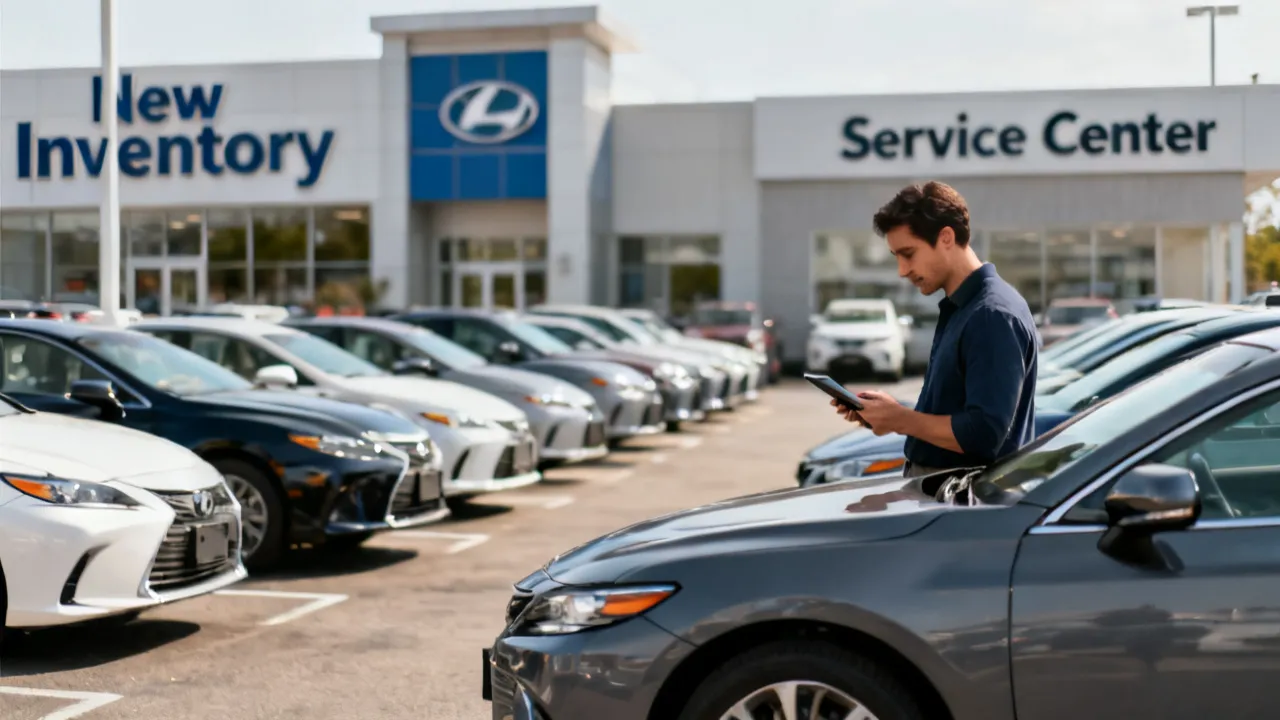
Vehicle availability is a major factor behind pricing, selection, and the speed of purchase when shopping for cars on sale. This guide explains how inventory flows, what to check before you commit, and how to locate affordable options using official trading platforms such as cars.com, CarMax, Caronsale, and Autotrader. It also provides a practical buying checklist and FAQs from an industry expert perspective.

When shoppers search for Vehicle Availability, they’re really trying to answer two questions at once: “Is the exact car I want actually on the lot?” and “Will its timing help me get a fair deal?” In very used-car markets, Vehicle Availability directly influences pricing, selection depth, and negotiation leverage. Cars listed “on sale” may look affordable, but your real advantage comes from how quickly you can verify condition, history, and financing terms before inventory turns over.
Think of vehicle shopping like trying to buy something that is simultaneously (1) a product and (2) a moving target. The product changes as inventory cycles—cars get sold, sent to reconditioning, reserved, or repriced. The target changes as the market responds—seasonality, local demand, and credit-driven incentives can swing what “on sale” really means. In that environment, Vehicle Availability isn’t just about quantity. It’s also about whether the discounted unit still exists, is inspectable now, and can be purchased under the same terms that made it look like a deal in the first place.
From an industry standpoint, vehicle supply is rarely uniform. Some models arrive in larger batches (for example, seasonal lease returns), while others are scarce due to regional demand or limited trade-ins. That’s why the same dealership can offer both great deals and quick “market-fit” pricing—depending on what is actually available that week.
There’s also a practical reason that Vehicle Availability matters first: it affects how much room the seller has to discount. If the seller has multiple comparable units, they may compete and price aggressively. If the seller only has one matching unit, they can often hold firm, knowing the buyer pool will still come calling. A car that looks cheap online might be priced like that because it’s abundant, but it might also be priced like that because it’s hard to sell for a reason—so verifying is still essential.
“On sale” can mean different things depending on the platform or dealer. Common interpretations include promotional pricing, limited-time incentives, or adjusted list prices after reconditioning. However, the very important point is this: a sale price is only truly meaningful after you confirm the vehicle’s specifications, condition report, title status (or equivalents), and any fees that affect the final out-the-door cost.
To stay objective, approach “on sale” listings the way a buyer’s agent would: treat the listed price as a starting point, then validate the totals and the risk factors that can change cost after purchase.
In real-world buying, the sale badge is a piece of marketing information. The actual deal is the combination of (a) the final price you sign for, (b) the condition you accept, and (c) the title/ownership status that determines future transferability. Verification is where buyers separate “attractive on-screen pricing” from “predictable cost-to-own.”
Here’s what can go wrong if you skip verification:
None of these issues automatically mean “do not buy.” They simply mean you need a verification workflow so the discounted listing doesn’t turn into a costly surprise.
The very efficient way to understand Vehicle Availability is to use reputable, official car trading marketplaces that maintain regularly updated inventories. Below is a comparison of major platforms that commonly list cars for sale. Use this as a quick map of where to look; detailed availability and pricing still depend on your region and browsing date.
When using online marketplaces, it helps to remember that inventory data is often refreshed frequently—but not always instantly. A car can appear “available” and then become “pending” before you contact the seller. That’s why these sites are best as discovery tools, not final verification tools.
| Platform | What You Typically Find | How It Helps Track Availability |
|---|---|---|
| cars.com | Broad marketplace listings from many sellers | Search filters (model, trim, mileage range) help narrow inventory quickly |
| Carmax | Dealer-style inventory with standardized retail process | Consistent listing structure makes cross-comparison simpler |
| Caronsale | Marketplace listings and deal-oriented browsing | Convenient discovery of “on sale” candidates |
| Autotrader | Large-scale listings and dealer postings | Strong search breadth helps identify where inventory is currently active |
Source of information:
source: https://www.cars.com/ • https://www.carmax.com/cars • https://www.caronsale.com/en • https://www.autotrader.com/
Note: Availability and sale prices can change daily based on inventory turnover, reconditioning timelines, and regional market demand. A “great deal” today can become “sold” tomorrow, and pricing can shift if demand spikes or if the seller receives additional supply.
If your goal is a cheap purchase, the top results usually come from combining “deal hunting” with “timing discipline.” Here’s how to do that—step by step—while keeping the logic grounded in how inventories actually move.
Cheap is not just a price tag. Cheap is the intersection of: a reasonable vehicle price, predictable maintenance expectations, and financing terms you can actually qualify for. Vehicle Availability is the lever that helps you find that intersection because it changes how much competition a seller faces and how quickly you can verify key facts.
To keep the process objective, align your purchase decision with clear requirements. The table below summarizes practical conditions buyers often use to ensure the “on sale” price reflects a controllable risk.
These requirements are essentially a checklist for turning “cheap” into “reasonable.” They reduce the chance that a temporary price advantage becomes a long-term cost burden.
| Condition/Requirement | Why It Matters | Decision Impact |
|---|---|---|
| Clear title/registration status (as applicable) | Reduces risk of future transfer or legal complications | May determine whether the deal is acceptable |
| Documented maintenance history | Helps estimate wear items and upcoming service costs | Supports a fair price discussion |
| Inspection before final commitment | Identifies hidden mechanical issues that can negate savings | Protects against expensive “false bargains” |
| Transparent total price (out-the-door) | Discovers whether “cheap” becomes expensive via fees | Prevents budget overruns |
| Financing incentive eligibility check | Promotional pricing can depend on credit and terms | Prevents price surprises at signing |
In addition to the table, consider other practical “requirements” that help you avoid wasted time when vehicle availability is changing quickly. For example, request the VIN early so you can verify history. Ask whether the car is currently subject to any pending sales appointment or “hold” status. Ask how quickly they can schedule the inspection and whether the vehicle will still be available after inspection.
To understand Vehicle Availability in practical terms, consider the supply chain from trade-in to sale. Vehicles typically enter the retail stream when owners trade in, lease terms end, or fleets cycle units. Then come reconditioning, inspections, and listing. Each stage affects when a car appears online and how long it remains visible.
This stage-by-stage journey is important because it explains why “on sale” pricing can look inconsistent. A car might be priced aggressively because it is close to the reconditioning schedule and they need to move it through the system. Another car might appear expensive because it’s still waiting on repairs or because it will be marketed to a higher-demand segment. Both can coexist in the same marketplace.
As an industry expert would explain, buyers win when they align their purchase timing with both selection and verification. If you’re only looking at the “sale badge” without checking availability and condition details, you may accidentally compete for the one vehicle that is discounted but not necessarily a low-cost ownership prospect.
There is also a psychological component to “availability.” When inventory is abundant, sellers may feel pressure to move units quickly, especially if they are competing with other dealers listing similar cars. When inventory is scarce, the seller can keep a car longer without dropping price. This means that the same list price might have different bargaining meaning depending on how much competition exists in the market at that moment.
To translate this into buyer action: if you notice several similar listings in your preferred area, you may have a better chance to negotiate total price. If you only find one matching listing across multiple platforms, you should shift negotiation toward verifiable facts (inspection results, service records, and concrete cost-to-own estimates) instead of relying only on negotiating pressure.
Even without assuming a single pricing trend, there is a consistent workflow that increases the odds of finding a good deal “nearby.” In practice, “nearby” is not just geographic—it also reflects your ability to verify quickly and close without delays, which can matter when inventory is turning fast.
Step 1: Identify your non-negotiables. Examples include vehicle type, basic drivetrain needs, and a realistic mileage range.
Step 2: Use broad filters first. Expand acceptable configurations until you see multiple results. This helps you map where Vehicle Availability is concentrated.
Step 3: Compare “on sale” listings side by side. Look for recurring price patterns across platforms. If a specific vehicle is consistently discounted across multiple sources, it may be more credible than a solitary low price.
Step 4: Confirm the key facts. Take note of model year, trim, transmission, mileage, reported condition, and whether the seller provides documentation and inspection disclosures.
Step 5: Ask targeted questions. Don’t ask vague questions like “Is it a good car?” Instead ask about service history, inspection outcomes, tire condition, brake condition, and whether any mechanical faults were discovered during reconditioning.
To make this workflow even more effective, add one more step: verify that the vehicle is not only listed but also available to be purchased without excessive waiting. For example, some cars might be on hold for another buyer, scheduled for auction processing, or awaiting completion of reconditioning. If your goal is to secure the deal quickly, you should ask about expected readiness date and whether you can schedule inspection immediately.
Negotiation strategy should reflect supply realities. When inventory is abundant, sellers typically can’t afford to be rigid, especially if the vehicle is older in the listing cycle. When inventory is scarce, the seller can be more confident because there are fewer comparable choices.
Negotiation is not only about lowering price; it’s about aligning the purchase agreement with the risk you’ve identified through verification. When you do the work (checking availability, validating condition, confirming title status), you can negotiate with evidence instead of emotion.
Additional negotiation tactics that pair well with Vehicle Availability:
Even with strong Vehicle Availability, not every “deal” is a deal. The following patterns frequently lead buyers into costly outcomes. A false bargain is typically not “overpriced.” It’s priced correctly for the risk you didn’t identify.
Other false bargain patterns you might encounter:
When you detect a false bargain pattern, the fix is not necessarily to “pay more.” The fix is to adjust the deal: request documentation, negotiate for repairs, change your selection, or exclude the vehicle from your shortlist.
A common mistake is to check one site obsessively and miss better inventory elsewhere. The smarter approach is to use a “triangulation” method:
This method is especially useful when Vehicle Availability changes quickly, because it reduces time wasted on vehicles that may already be in transit, pending sale, or re-listed after reconditioning.
To triangulate efficiently, capture the following data points from each listing: VIN (or at least the listing ID), posted mileage, listed trim, listing date, and advertised condition notes. If you find mismatched details across platforms, that can be a sign the listing is not synchronized properly or the vehicle is in a transition stage.
Also consider using alerts or saved searches (where available). A key advantage of these tools is that they reduce the “reaction delay” that causes you to miss newly posted deals. In an environment where inventory can disappear quickly, being first to verify matters. Being late can turn a bargain into a “sold” listing that you never had a chance to inspect.
It refers to whether specific vehicles are actually available for purchase now (not just advertised), including whether the listing reflects an inventory unit you can inspect, reserve, or buy through the seller. High availability usually means more choice and more competition among listings.
It also includes practical availability: can you schedule an inspection within a day or two? Will the vehicle remain on-site long enough for you to verify? If the car can only be seen on a specific day after reconditioning, that’s still “available” but with reduced timing flexibility.
No. “On sale” can reflect promotions, inventory turnover, or adjustments based on condition and demand. The key is validating the out-the-door price, reading condition details, and confirming the real cost drivers such as fees and financing incentives.
A sale price can be excellent—but only when it corresponds to a vehicle that matches your risk tolerance. If the low price comes with hidden repair needs or uncertain history, it may not be a good deal for you.
Start with a structured search for candidates, then use a pre-purchase inspection, verify service records where available, confirm title/registration status as applicable, and negotiate based on total price—not just the headline discount.
Another risk-reduction step is to set a “maximum unknown cost” in your mind. For example: if you can’t confirm maintenance history, decide what you’d be willing to spend on likely wear items. If that unknown cost pushes the total beyond your budget, the vehicle doesn’t qualify even if the listed price looks attractive.
Marketplaces such as cars.com, CarMax, Caronsale, and Autotrader are commonly used to discover listings. Always confirm availability with the seller because inventory status can change quickly.
As you shortlist, consider checking whether the seller uses a standardized inventory system. Standardization doesn’t guarantee perfection, but it often provides clearer listings and more predictable processes, which helps you move from “browsing” to “verification” efficiently.
Overall value generally matters more. The lowest listed price can be offset by higher repair needs, uncertain condition, or financing structures. A “top value” approach compares the total cost-to-own using inspection results and transparent pricing.
To do this well, separate categories: purchase price, maintenance and repair expectations, insurance costs, and financing cost (interest). Then compare vehicles based on their likely total cost over the period you plan to keep the car.
When choice is limited, negotiate using verifiable factors: inspection findings, reconditioning needs, and total out-the-door pricing. Ask for itemized cost breakdowns and ensure any promotional pricing is applicable to your financing situation.
If you can’t negotiate price down, you can often negotiate other terms: repairs performed before purchase, warranty inclusion, removal of optional add-ons, or an improved trade-in valuation (if relevant). Availability may limit your ability to demand a lower price, but it doesn’t eliminate your ability to demand fairness in the agreement terms.
Request clear condition disclosures, maintenance or service documentation if available, inspection outcomes, and an itemized breakdown of fees and total price. If applicable in your region, also confirm title or registration status details.
When possible, ask for the VIN and request that the seller provide history documentation consistent with the listing details. If documentation is unavailable, ask what steps the seller has taken to verify condition and whether the vehicle has passed any inspection criteria prior to sale.
Before you sign anything, run through this concise checklist. It’s designed to align with the goal behind Vehicle Availability: buying the right car at the right time with controlled risk.
As a final practical rule: if you can’t verify the essentials quickly, your “cheap” advantage may be an illusion caused by incomplete information. In vehicle buying, time spent on verification is often cheaper than money spent on repairs or regretted purchase decisions later.
1) The above information comes from online resources, and the data is as of October 2023. 2) For more information, please refer to the official website.
Reference Links (and all links used in the article):
https://www.cars.com/
https://www.carmax.com/cars
https://www.caronsale.com/en
https://www.autotrader.com/
Understanding Vehicle Availability for Better Purchasing Decisions

How Vehicle Availability Affects Used Car Deals
How to Secure Vehicle Availability Efficiently
How Vehicle Availability Shapes Smarter Fleet Decisions
Vehicle Availability Guide for Buying a Used Car

Vehicle Availability Guide for Buying a Car

Vehicle Availability Guide for Buying a Deal Car

Vehicle Availability Guide for Reliable Sourcing Decisions
Understanding Vehicle Availability for Smarter Buying Decisions

How Vehicle Availability Affects Used Car Deals
Vehicle availability is a major factor behind pricing, selection, and the speed of purchase when shopping for cars on sale. This guide explains how inventory flows, what to check before you commit, and how to locate affordable options using official trading platforms such as cars.com, CarMax, Caronsale, and Autotrader. It also provides a practical buying checklist and FAQs from an industry expert perspective.
Vehicle Availability Guide for Buying a Used Car
Vehicle Availability determines how quickly you can match your needs with cars on sale, from pricing and inventory to lead times. This guide explains, in an objective way, how to evaluate availability across major trading platforms, compare listings from official car trading websites, and use a step-by-step method to find a cheap car with confidence—while accounting for condition, location, and verification requirements.
Vehicle Availability Guide for Buying a Car
Vehicle Availability is the practical starting point for finding the right car in a market that changes daily. This guide explains how to evaluate inventory, pricing signals, and dealer listings without guesswork, using established official trading websites. You’ll learn how to locate offers, compare options, and decide efficiently—backed by clear conditions and expert buying considerations.
Vehicle Availability Guide for Buying a Deal Car
This guide explains how to assess Vehicle Availability before buying a car on sale, so you can avoid common surprises in stock, timing, and paperwork. It covers how to compare listings, confirm inventory details, and evaluate total costs beyond sticker price. Background sections outline how online marketplaces, dealer inventory systems, and vehicle history information shape what shoppers see.
How to Check Vehicle Availability and Buy Cheap
Vehicle Availability is the deciding factor for buying a car that fits your budget, because the top deals often depend on what’s actually in stock. This guide explains how to use reputable official trading platforms to locate on-sale vehicles, compare pricing and terms, evaluate history and condition, and complete a purchase safely. It also provides a structured checklist, key conditions, and FAQs.

Vehicle Availability Guide for Buying a Car
Vehicle availability determines what you can buy today, what arrives next, and where pricing pressure may appear. This guide explains how to interpret current inventory, use trusted official car trading websites (cars.com, Carmax, Caronsale, and AutoTrader), compare dealer offers, and apply practical steps to find a reliable low-cost vehicle while meeting key purchase conditions.