Vehicle Availability is the deciding factor for buying a car that fits your budget, because the top deals often depend on what’s actually in stock. This guide explains how to use reputable official trading platforms to locate on-sale vehicles, compare pricing and terms, evaluate history and condition, and complete a purchase safely. It also provides a structured checklist, key conditions, and FAQs.
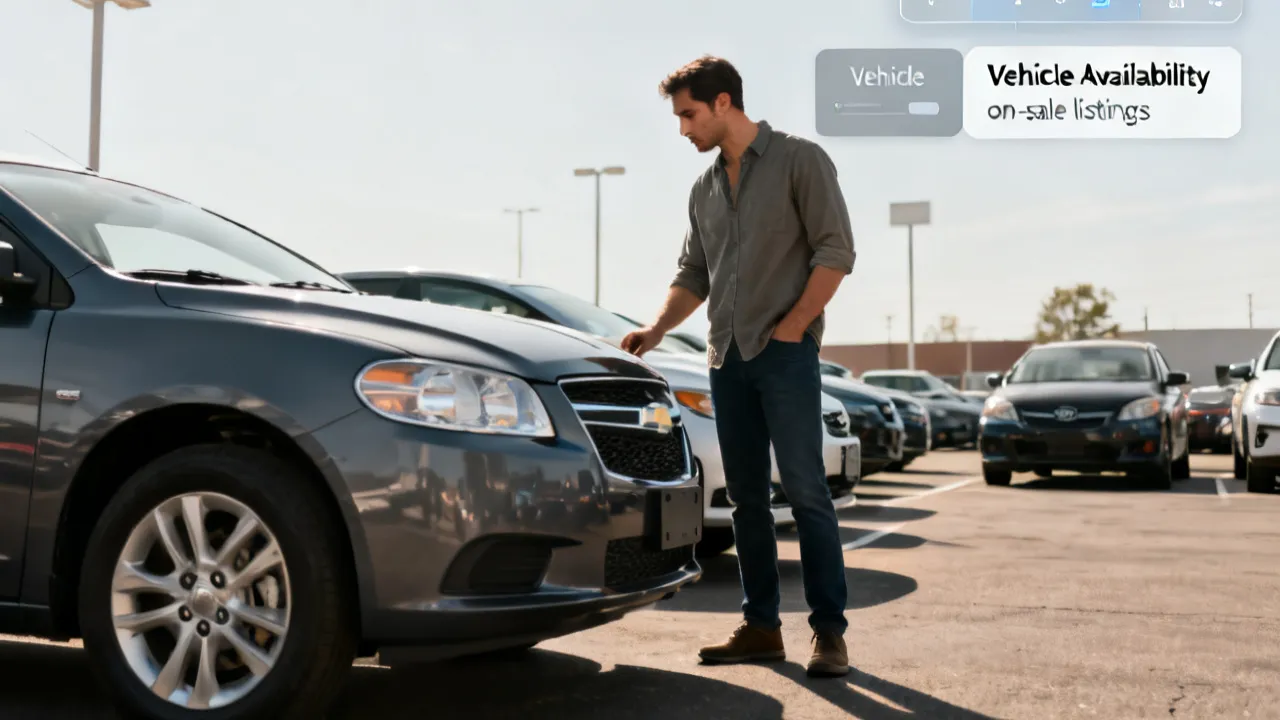
When shoppers search for an affordable vehicle, they often focus on the sticker price alone. In practice, Vehicle Availability determines which inventory you can realistically buy—because the “low price” listing that looks attractive online may be unavailable when you call, arrive, or complete financing. A disciplined approach starts with confirming that vehicles are truly in stock, then comparing on-sale details (pricing structure, fees, title status, and return/offer terms) across credible sellers.
From an industry perspective, the very efficient path to a budget-friendly purchase is not chasing the lowest number; it’s targeting listings that remain available long enough for you to verify condition, history, and total out-the-door costs.
In other words, the cheapest “on sale” car is not always the lowest advertised price—it’s the one you can actually purchase at that price with predictable costs and minimal risk. The moment Vehicle Availability is uncertain, a buyer’s time becomes the hidden cost. Your goal is to reduce that hidden cost by filtering for listings that are both affordable and obtainable.
To do that, treat each “cheap” listing as a hypothesis to test: the car may be priced well, but only a seller’s current inventory status, scheduling ability, and paperwork readiness can confirm that the deal is real. The earlier you verify, the less likely you’ll lose time to a listing that’s already reserved, pending, or subject to conditions you can’t meet.
Vehicle Availability is more than “the car exists.” It refers to the practical ability to obtain that exact vehicle with minimal delay and minimal surprises. Availability can be affected by:
Because of these factors, “on sale” should be treated as a starting point, not a conclusion. A listing’s headline price might be correct—but your ability to purchase it at that price depends on conditions that only become clear during conversation, scheduling, and paperwork review.
When you treat availability as your first filter, you avoid a common trap: buyers who “fall in love” with a number in an online listing, then discover too late that the deal requires eligibility they can’t meet, the car is already spoken for, or the out-the-door costs are substantially higher than expected.
To reduce wasted time and improve accuracy, begin with recognized car trading platforms that publish searchable inventory and buyer-facing details. Below is a comparison of common sources you can use to check Vehicle Availability and on-sale offers.
Using reputable platforms matters for two reasons. First, these platforms typically maintain inventory listing hygiene that makes it more likely an “active” listing truly reflects a current inventory state. Second, reputable platforms often provide standardized listing fields (price, condition, location, dealer identity, and sometimes financing/offer notes) that help you compare deals without constantly jumping between unrelated sites.
That said, even on major marketplaces, Vehicle Availability can change quickly. You should still verify with the seller directly before you invest more time. Consider the platform listing your first screen—not your final proof.
| Platform | How it helps verify Vehicle Availability | What you typically review for “cheap” |
|---|---|---|
| cars.com | Large-scale listings with filters that help narrow results by price, condition, and dealer inventory status. | Total listing price, dealership details, and whether the listing is still active. |
| Carmax | Dealer-style inventory presentation designed for straightforward shopping and consistent listing structure. | Pricing transparency, vehicle condition presentation, and available promotions. |
| caronsale.com | Curated marketplace listings intended to surface deals; top used to shortlist and then confirm stock directly. | On-sale tags plus verification of ownership/title status through the seller. |
| autotrader.com | Marketplace listings that support comparison across multiple dealers and regions. | Deal structure, availability timeframe, and eligibility for any advertised offers. |
Source of information:
List of referenced official platforms from the provided materials.
source: www.cars.com;
source: www.carmax.com/cars;
source: www.caronsale.com;
source: www.autotrader.com
If your goal is a truly affordable purchase, follow a sequence that protects you from “looks cheap, turns expensive.” The logic is simple: confirm availability first, then verify total cost of ownership, then evaluate the deal terms.
A step-by-step approach also helps you make better decisions under pressure. Cheap on-sale vehicles often come with short decision windows—because demand is high or because promotions have limited allocations. When you have a process, you don’t have to rely on memory or improvisation during a busy conversation at a dealership.
Below is a structured method that emphasizes verification, documentation, and clarity on the “effective price”—the price that includes fees, taxes, required items, and any financing-based conditions.
Many buyers under-estimate the final cost by focusing only on list price. Before you shortlist a vehicle, estimate your likely “out-the-door” total. Ask for a breakdown that typically includes taxes, registration, documentation fees, and any add-ons. If an on-sale price looks unusually low, confirm what it excludes.
To make this practical, create a simple budget worksheet with fields like:
When the seller provides a quote, compare it to your worksheet. If their out-the-door estimate is significantly higher than expected, ask why. The goal is not to punish the seller—it’s to ensure you’re comparing comparable deals. A car can look cheap online, but if it has required add-ons or inflated fees, the “cheap” label becomes misleading.
Also consider your total cash commitment if financing is not guaranteed. Some on-sale pricing assumes a specific down payment. If you can’t meet that down payment requirement, the effective price may rise substantially.
On search platforms, verify that the listing is actively available. Then:
Because promotions can expire and inventory can sell quickly, treat “active listing” as time-sensitive. A listing can display for days, but the car might be reserved within hours of your inquiry.
A useful habit: before you go further, send one concise message or call and ask one availability question. For example: “Is this vehicle still available as of today, and can I inspect it within 24–48 hours?” If they answer clearly and schedule promptly, you’ve confirmed a key factor. If they give vague responses, you should pause and reassess.
“Cheap” is only meaningful when vehicles are comparable. Use consistent criteria:
From an expert’s perspective, comparing across too many variables at once is where buyers lose negotiating power. If you compare a base trim with no warranty to a higher trim with new tires and a warranty, the difference in price might be justified by real value. You want to compare features and condition so you can judge whether the “cheap” price is truly a discount or simply reflects worse wear and risk.
Shortlisting 3–5 vehicles also gives you a backup plan. If your top choice sells or if your financing terms don’t match the on-sale assumptions, you can pivot quickly without losing momentum.
When you shortlist, build a comparison grid. A grid reduces emotional decision-making because it forces you to evaluate the same categories side by side. Categories might include: price, out-the-door estimate, warranty type, mileage, condition notes, and any disclosed mechanical issues.
Once you identify strong candidates, ask for the items that reduce uncertainty:
When Vehicle Availability is tight, sellers may push quick decisions. Do not let speed override documentation. A cheap deal can become costly if it hides major repairs, or if it has a branded title that limits insurance cost predictability or resale value.
To make verification more efficient, ask for documents before you commit to an appointment. Many dealers can email a CARFAX/AutoCheck-style report or a pre-purchase inspection checklist, or they can provide a link. Even if you plan to visit in person, having the documentation beforehand helps you prepare questions and prevents you from being distracted by high-pressure sales tactics.
Also ask about inspection timing and what “as inspected” means. For example, does the seller provide a multi-point inspection report? Does it include brake pad thickness, tire tread depth, and fluid condition? Does it list any deferred repairs? “Inspection” can be used loosely; you want to know what was actually checked.
An “on sale” vehicle might still be expensive if it has higher expected maintenance needs, less favorable tire/brake condition, or hidden structural concerns. A cheap deal should feel cheap for a reason you can validate—such as cosmetic wear—rather than because it is difficult to verify or has risk signals.
There are two key pricing viewpoints:
For long-term affordability, focus on wear items and predictable costs: tires, brakes, battery condition, suspension wear, and whether the vehicle has a history of repeated issues. Used cars with “cheap” pricing sometimes have a reason—possibly neglected maintenance or previous damage repairs.
When you evaluate fairness, ask yourself:
A practical strategy: request an estimate or at least a list of recommended services if you have an inspection. If you find that a “cheap” car needs expensive immediate repairs, it might not be cheap for you, even if it’s cheap in the listing.
Negotiation is easier when you bring evidence. Consider:
In many cases, a buyer can secure a better final price by focusing on necessary adjustments rather than generic bargaining. For example, rather than saying “your price is too high,” use objective points: “The tires are below safe tread, and comparable vehicles show newer tires—can you adjust price or replace the tires?”
That style of negotiation tends to be more productive because it gives the seller a clear path to agreement. It also helps you avoid negotiating against your own information. If you negotiate without data, you might accept a deal that looks better on a spreadsheet but is worse in real life.
Another tactic: negotiate based on out-the-door price, not only on a monthly payment. Monthly payment can be manipulated by loan term, interest rate, or down payment structure. If you focus on out-the-door price and itemized fees, you protect yourself from payment-based confusion.
Some “cheap” offers depend on financing products, down payment, or promotional rates. Ask for:
Promotional “low monthly payment” deals can look great but become expensive if the APR is high or if the required conditions are not actually met. Always calculate the effective cost or ask the finance manager to provide a full loan worksheet.
When you confirm financing terms, also ask about prepayment penalties (if any), as well as any fees for early payoff or restructuring. Most standard auto loans do not heavily penalize early payoff, but it’s still worth clarifying—especially if the promotional deal is tied to specific lender rules.
If you do not want financing-related surprises, consider pre-approval from your own bank or credit union. Pre-approval gives you a benchmark APR. Then you can compare the dealer’s financing offer against your pre-approval, which helps you avoid accepting a worse deal due to convenience.
Before signing, ensure you understand return policies (if offered), inspection contingencies, and how the seller defines “as-is” vs. “warranty-backed.”
In practice, a contingency is your safety net. Without it, you might have little recourse if the vehicle has hidden issues discovered after purchase. Ask questions that clarify:
Many cheap deals fail not because the listing price was wrong, but because the paperwork terms were unfavorable. You want clarity on the contract language so you can evaluate risk realistically.
Also consider timing: if you’re relying on a short offer window, make sure your paperwork timeline aligns. A deal can “technically” be available until the moment you sign, but promotions might expire before the final financing approval. If that happens, the pricing may change.
The top deals often come with practical constraints. Review these conditions so you can decide with full awareness.
| Condition/Requirement | Why it matters for Vehicle Availability and pricing | What to do |
|---|---|---|
| Active inventory status | Ensures the vehicle can actually be purchased now. | Confirm appointment availability and whether the car is already reserved. |
| Offer eligibility | Some on-sale prices depend on financing or trade-in rules. | Ask for a written quote showing assumptions and eligibility requirements. |
| Documentation and fees | Total cost can differ from online price due to add-ons. | Request a detailed out-the-door estimate before agreeing. |
| Inspection and disclosure timing | Fast timelines can limit verification. | Schedule your inspection quickly; do not skip title/history verification. |
| Warranty/return terms | “Cheap” can become costly if coverage is limited. | Confirm coverage duration, exclusions, and claim process. |
Beyond the table items, buyers should also watch for common “hidden” deal structures. For example, a seller may offer a promotional discount but require a specific set of services bundled into the purchase. Or the seller may quote a price that assumes a trade-in you do not plan to make, which means the discount won’t apply if your trade-in changes. Another scenario is when the seller advertises a low price but the vehicle is subject to dealer-installed options or mandatory add-on packages.
Because these issues can affect both the availability and the effective price, they should be clarified early—preferably before you schedule an inspection. That way, you can avoid spending time traveling to a vehicle you cannot buy at the advertised “cheap” price.
Inventory can move quickly. When demand rises, vehicles may disappear from listings or be marked sold. Use these tactics to stay competitive without rushing:
When availability is changing, speed matters, but it should be disciplined speed. The difference between a great deal and a regrettable one is often not how quickly you respond; it’s whether you confirm the details before you sign.
A helpful mindset is to treat each step as a “gate.” The listing price might pass the first gate (affordability), but it must pass additional gates (availability confirmation, documentation verification, and out-the-door cost clarity). If it fails any gate, you either renegotiate, ask follow-up questions, or move on to your backup options.
In practice, this gate approach reduces anxiety. It turns a stressful buying experience into a manageable checklist. If a vehicle disappears during your decision timeline, you already have backups. If a fee surprises you, you already know how to challenge it because you’ve requested a detailed estimate early.
In real-world dealership operations, the phrase “on sale” can mean different things: price reductions, limited-time offers, special financing, or bundled value. To make the very of on-sale inventory, confirm:
This diligence is especially important when Vehicle Availability is tight and decision windows are short. If the deal is conditional, you might still be able to purchase it—just not at the conditions you assumed from the online listing.
To avoid confusion, ask the seller to state the on-sale terms in plain language and also provide a written quote. The written quote should show the discount line item, the required conditions, and the final price you will pay.
Another practical tip: ask if the car price changes after you choose financing options. Some deals apply a discount only when you select a certain APR or lender. If you are comparing financing offers, calculate the effective price under each scenario rather than assuming the discount remains the same.
Start with Vehicle Availability: confirm the listing is active, the seller can schedule an inspection quickly, and the vehicle is not already reserved or sold. Then compare the total cost assumptions behind the advertised price.
Practically, you can verify availability by asking for a visit appointment window and confirming the VIN (vehicle identification number) matches the listing. If the seller hesitates to provide VIN or can’t confirm basic details, that’s a signal to slow down.
Use a structured verification checklist: ask for out-the-door pricing, request history/inspection documentation, confirm title status, and ensure any on-sale discount is not conditional on factors you don’t meet.
Time-wasters often happen when you travel before confirming terms. Avoid that by requesting key details early, such as: whether the vehicle is still physically available, whether the title is ready, and whether the out-the-door price matches your budget assumptions.
No. A low price may reflect wear, limited warranty coverage, or excluded fees. Evaluate the effective total cost and the vehicle’s condition disclosures—especially items like tires, brakes, and service history.
A “better deal” depends on how much risk you’re taking and what costs you’re likely to incur immediately. If a car is cheap but needs urgent repairs, the savings can disappear quickly.
Yes, comparing across established marketplaces can help you identify consistent pricing patterns and availability. However, once you shortlist a vehicle, verify directly with the seller for accuracy.
Comparing multiple platforms also helps you catch outliers. If one listing is dramatically cheaper than similar vehicles and the seller can’t explain why, you’ll know to ask harder questions.
Typically, ask for a vehicle history report (or equivalent), inspection summary, and clarification of title status. If the seller offers warranty terms, request them in writing.
If the seller provides a “seller inspection sheet,” ask whether it covers safety components (brakes, tires, steering, suspension) and whether any warnings or fault codes were found.
Promotional pricing can depend on credit approval, down payment, loan term, or trade-in. Confirm the APR and calculate the total cost over the loan to determine the true effective price.
A common mistake is comparing a promotional payment estimate without verifying total interest. A low monthly payment might be achieved through a long term, which increases overall interest cost.
That happens. To manage it, move quickly on verification, maintain a backup shortlist, and ask about reserving the vehicle or locking in the offer terms if the seller permits it.
Ask whether the seller can hold the vehicle for a short period once you confirm your intent. If reservation is allowed, ask what the deposit amount is and whether it is refundable.
Yes—used vehicles vary widely in condition. Prioritize a pre-purchase inspection, confirm disclosure items, and understand warranty or return limitations before signing.
If you can, consider having an independent mechanic inspect the car (when allowed). A dealer inspection is helpful, but an independent inspection can provide a second set of eyes—especially on wear items and potential deferred maintenance.
Official trading platforms cited as sources of information per the provided references:
https://www.cars.com/
https://www.carmax.com/cars
https://www.caronsale.com/en
https://www.autotrader.com/
1) The above information comes from online resources, and the data is as of October 2023.
2) For more information, please refer to the official website(s) linked above.
Understanding Vehicle Availability for Better Purchasing Decisions

How Vehicle Availability Affects Used Car Deals

How to Secure Vehicle Availability Efficiently
How Vehicle Availability Shapes Smarter Fleet Decisions
Vehicle Availability Guide for Buying a Used Car

Vehicle Availability Guide for Buying a Car

Vehicle Availability Guide for Buying a Deal Car

Vehicle Availability Guide for Reliable Sourcing Decisions
Understanding Vehicle Availability for Smarter Buying Decisions

How Vehicle Availability Affects Used Car Deals
Vehicle availability is a major factor behind pricing, selection, and the speed of purchase when shopping for cars on sale. This guide explains how inventory flows, what to check before you commit, and how to locate affordable options using official trading platforms such as cars.com, CarMax, Caronsale, and Autotrader. It also provides a practical buying checklist and FAQs from an industry expert perspective.
Vehicle Availability Guide for Buying a Used Car
Vehicle Availability determines how quickly you can match your needs with cars on sale, from pricing and inventory to lead times. This guide explains, in an objective way, how to evaluate availability across major trading platforms, compare listings from official car trading websites, and use a step-by-step method to find a cheap car with confidence—while accounting for condition, location, and verification requirements.
Vehicle Availability Guide for Buying a Car
Vehicle Availability is the practical starting point for finding the right car in a market that changes daily. This guide explains how to evaluate inventory, pricing signals, and dealer listings without guesswork, using established official trading websites. You’ll learn how to locate offers, compare options, and decide efficiently—backed by clear conditions and expert buying considerations.
Vehicle Availability Guide for Buying a Deal Car
This guide explains how to assess Vehicle Availability before buying a car on sale, so you can avoid common surprises in stock, timing, and paperwork. It covers how to compare listings, confirm inventory details, and evaluate total costs beyond sticker price. Background sections outline how online marketplaces, dealer inventory systems, and vehicle history information shape what shoppers see.
How to Check Vehicle Availability and Buy Cheap
Vehicle Availability is the deciding factor for buying a car that fits your budget, because the top deals often depend on what’s actually in stock. This guide explains how to use reputable official trading platforms to locate on-sale vehicles, compare pricing and terms, evaluate history and condition, and complete a purchase safely. It also provides a structured checklist, key conditions, and FAQs.

Vehicle Availability Guide for Buying a Car
Vehicle availability determines what you can buy today, what arrives next, and where pricing pressure may appear. This guide explains how to interpret current inventory, use trusted official car trading websites (cars.com, Carmax, Caronsale, and AutoTrader), compare dealer offers, and apply practical steps to find a reliable low-cost vehicle while meeting key purchase conditions.